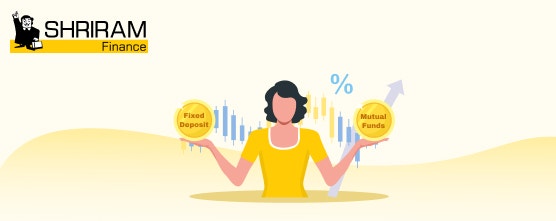
If you’ve ever tried figuring out where to park your savings between a fixed deposit (FD) and a mutual fund you already know how confusing it can get. Everyone around you has an opinion. One friend says FDs are reliable, another says mutual funds give better returns. And you’re left wondering — “why does investing have to be so complicated?”
Let’s slow it down a bit and look at this in plain, simple terms. You don’t really have to pick one side. In fact, the smartest investors don’t. They mix both mutual fund and fixed deposit and let them balance each other out.
FD Vs. Mutual Fund: What Are We Even Comparing?
A Fixed Deposit (FD) is as simple as it sounds. You give your money to a bank or a Non-Banking Financial Company (NBFC) for a fixed time — could be 1 year, 3 years, or even 5 and they promise to pay you back with interest. You know exactly how much you’ll get. There’s zero surprise at maturity. That’s why our parents and grandparents loved FDs. It’s predictable.
Now, a mutual fund is a bit different. So how does it work exactly? Here, your money is pooled together with other investors and invested in things like stocks or bonds. So the value can go up or down depending on the market. But over time mutual funds tend to grow faster than FDs — if you stay patient.
So basically, one gives you stability. The other offers growth. The trick? Knowing how to balance the two.
Don’t Pick One Use Both
Here's the thing! FDs alone won’t build your wealth. But they’ll help you sleep peacefully at night. That's because they offer stable and predictable returns. And mutual funds? They can help you grow your wealth. But they’ll also test your nerves when markets drop. So instead of playing reliable or risky, why not be smart and use both?
When you split your money between these two, you’re protecting yourself from both extremes — total risk and total stagnation.
That’s the real art of financial planning.
Step 1: Start with Your Goals
Before you even think of percentages, ask yourself — what are you saving for?
If your goals are short-term — like buying a car next year, taking a vacation, or keeping money handy for emergencies — FDs are perfect. They’re reliable, easy to understand, and the returns are steady.
But if your goals are longer-term — say, retirement, buying a home, or your kid’s college fund — then mutual funds can help your money grow faster than inflation.
Here’s a simple way to look at it.
FDs for stability. Mutual funds for long-term growth. You need both for a balanced plan.
Step 2: Know Your Risk Tolerance
Some people love taking risks. Others can’t stand losing even a little. But what works for you?
If market swings make you nervous, keep a larger share in FDs. If you’re okay watching the market go up and down (knowing it’ll likely rise over time), lean more toward mutual funds.
Here’s a general thumb rule (not a strict one):
- Conservative investors: 70% FD, 30% mutual funds
- Balanced investors: 50% FD, 50% mutual funds
- Aggressive investors: 30% FD, 70% mutual funds
As your income and confidence grow, you can shift gradually toward mutual funds.
Step 3: Think About Liquidity
Liquidity basically means — how easily can you get your money back? Breaking an FD before maturity usually means losing some interest. So, it’s good for money you won’t need soon.
Mutual funds are also flexible — especially liquid funds. You can usually withdraw your money in a couple of days. But some mutual funds come with an exit load.
Step 4: Compare Returns (But Do It Smartly)
People often compare FD interest rates and mutual fund returns directly — which doesn’t make much sense. FDs give fixed, predictable returns — around 7–9% right now.
Mutual funds, especially equity ones, don’t promise returns, but over time, they’ve averaged 10–12% annually.
So, FDs protect your money. Mutual funds grow it. The smart thing is to use both to your advantage.
For instance, you can invest your FD interest in a mutual fund SIP every month — that way, your “stable” investment also fuels your “growth” investment. Small move, big impact.
Step 5: Don’t Forget About Inflation
This one’s important. Inflation quietly eats into your savings. You might be earning 7% on an FD, but if inflation is at 6%, you’re barely growing. Though many reputed NBFCs are known to offer high interest rates that can help beat inflation.
And what about mutual funds? They have the potential to beat inflation over the long run, especially equity funds.
So if you’re thinking long term, a mutual fund helps you stay ahead, while your FD gives you that cushion of stability.
Step 6: Review and Rebalance Every Year
Once you’ve decided how much to put where, don’t just forget about it. Check in once a year. Maybe your mutual funds did really well — great. But that might mean you now have more exposure to risk.
In that case, move a bit of that profit into an FD. On the flip side, if FD rates go up, maybe increase your FD investment for a while. Rebalancing helps keep your portfolio healthy — just like an annual health check-up.
Why FDs Still Deserve a Place in Your Portfolio
Even if you love market-linked returns, FDs are still your stability net. They give you predictability. And if the market takes a hit, your FD quietly keeps earning interest.
Plus NBFCs offer some of the most competitive FD rates in the market, with flexible tenure options. You can choose cumulative or non-cumulative FDs depending on whether you want a regular payout or a lump sum at the end.
That’s why even seasoned investors keep a portion of their funds in FDs. It’s not about fear. It’s about balance.
Wrapping It Up
Here’s the truth! No single investment can do it all. You can’t expect market-beating returns and total safety in one place. That’s why diversification matters.
FDs give you stability and steady income. While mutual funds give you growth and wealth creation. Instead of arguing over fixed deposit vs mutual fund, focus on how both can work together to help you reach your goals.
So, the next time someone tells you to go all in on one, consider going for both. Because that’s how real financial planning works.
Make Stability Work for You
Looking to balance your portfolio with a reliable, high-yield FD?
Try Shriram Fixed Deposit. It offers strong returns, flexible tenure options and a simple, digital application process.
FAQs
Why should I consider both FDs and mutual funds in my investment portfolio?
Because both have different strengths. FDs are stable and predictable. Mutual funds can help your money grow faster. Together, they make your portfolio stronger and more balanced.
How do risk profiles affect FD vs. mutual fund allocation?
If you prefer predictability and don’t like volatility, put more in FDs. If you’re okay with some risk for better returns, allocate more to mutual funds. Your comfort level decides the mix.
Is it safe to invest in mutual funds compared to fixed deposits?
FDs are more stable since they’re not affected by markets. Mutual funds involve risk. But if you invest long term and choose the right type, they can be reliable and rewarding.