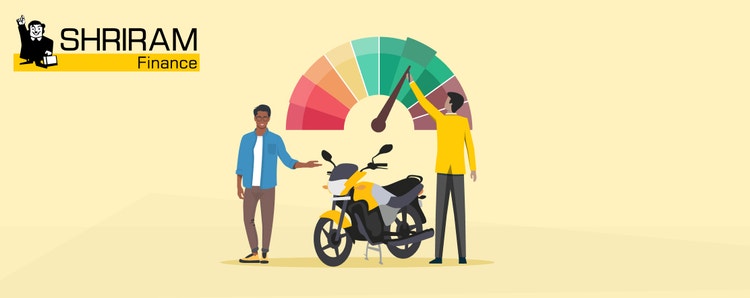
There's no doubt a two-wheeler can make your life easier and save you money. But before you start your bike loan application, it is important to look at your credit score. Your score plays a big role in deciding the loan amount, interest rate, and approval speed. A stronger score can make the whole process smoother and can give you access to better repayment options.
This guide explains why credit scores matter for bike loans and how you can improve yours before applying.
Importance of Credit Score for Bike Loan
A credit score is a three-digit number that reflects your repayment history, loan behaviour, and financial discipline. In India, most lenders refer to the CIBIL score. This ranges between 300 and 900.
• A score above 750 is usually considered very good.
• Scores between 650 and 749 may still get you approved. But there could be a higher interest rate.
• Any score that’s lower than 650 could make lenders cautious and this could lead to rejection.
When it comes to getting a bike loan, the credit score impact is important. With a strong score, you are more likely to get competitive interest rates, a higher loan amount, and faster approval. On the other hand, a weak score limits your options.
What Do Lenders Really Look At?
Your credit score is just the beginning. Lenders want to see your financial habits in action—everything that tells the story of how you handle your finances.
• Payment history – Paying EMIs, credit card bills, or past loans on time shows you can be trusted. A delay or a missed payment will make the lender cautious and will also reflect negatively on your score.
• Credit utilisation ratio – Using a large portion of your available credit makes you look risky. Keeping utilisation below 30% is recommended.
• Age of credit history – Older accounts show stability. Closing long-standing accounts can sometimes lower your score.
• Credit mix – The balanced combination of secured loans (such as home loans or bike loans) and unsecured loans (like personal loans or credit cards) is said to work much better than depending on either one type.
• New credit enquiries – Too many loan or card applications in a short time may reduce your score, as they appear as hard enquiries.
Steps to Improve Your Credit Score
Improving your score is a gradual process but depending on how much time you have before applying, you can take different kinds of action.
In the short term, focus on quick fixes that prevent further harm: clear any overdue bills, pay more than the minimum due on all credit cards to avoid growing interest charges. It’s always best practice to aim and pay the full balance whenever possible avoid new credit applications and check your credit report for errors. If you find inaccuracies, raise a dispute with the bureau and inform the bank. Even a small correction can reduce the negative credit score impact and give your score a slight lift.
Over the next few months, you can start building steady habits. A few simple habits can really boost your score. First, set up automatic payments to make sure you're never late. It’s also smart to pay down your credit card balances as much as you can. And if you have multiple cards, try to spread your spending around—this helps keep the credit utilisation on any single card low.
If you have overdue accounts, negotiate repayment plans with lenders instead of letting them remain unpaid. If you are just getting started in establishing your credit history, then responsible handling of a secured card can help you positively establish a track record.
In the long term, consistency makes the biggest difference. Keep older accounts active to maintain credit history, pay EMIs and bills on time, and avoid frequent borrowing. Gradually diversify your credit by maintaining both secured and unsecured credit accounts simultaneously if you can. Keep track of the score on a monthly basis to observe progress in time, as such habits can contribute to increasing the score and thus making it easier to qualify for a better loan offer.
Correcting Errors on Your Credit Report
Mistakes in your credit report are more common than many think. Errors arising from an account wrongly marked as unpaid or a loan that has not been updated after closure can have a bad effect on your score.
Here is how to rectify this:
Obtain your credit report – It can be downloaded from CIBIL, Experian, Equifax, or CRIF High Mark.
Check for mismatches – Look for incorrect loan entries, double records, or payments which were not updated.
File a dispute – Directly raise the issue on the bureau's website. You can upload proof such as payment receipts.
Follow up with the bank – At times, the lender is required to confirm the corrections. Keeping a record of communication helps.
Wait for update – It may take a month or two for changes to reflect. The score should then increase.
Final Thoughts
It's not really that difficult to improve one's credit score; that is just a matter of having focus and patience. Clear pending bills, reduce credit usage, and check the report for errors. Afterwards, keep building those good habits for a couple of months.
When you are ready, apply for a bike loan with confidence. Maintaining a strong credit profile can make the journey smoother and give you more options to choose from.
Shriram Finance can help you get the two-wheeler you want with competitive interest rates and payment plans that work for you. See your options and get started on our website.
FAQs
How to enhance my credit score before applying for a bike loan?
You can seriously boost your credit score by focusing on these habits: paying off old bills, reducing your credit card debt, and not taking new loans. The most impactful habit of all is simply paying your bills on time, every time.
In what way will a higher credit score benefit your application for a bike loan?
A better score leads to a faster approval process and interest rates along with flexible repayment options.
What is the minimum credit score needed for a bike loan?
While a score over 650 is generally good enough, aiming for 750 or higher is your best bet for better loan approval chances and lower interest rates.
Will checking my credit score lower it?
No. Checking your own score is considered a "soft enquiry," and it won't negatively affect your score at all.
How long will it take to see my credit score go up?
You might see small changes reflected in your score within a month. For a more significant jump in your score, you will see a real difference after consistently making on-time payments for about three to six months.